

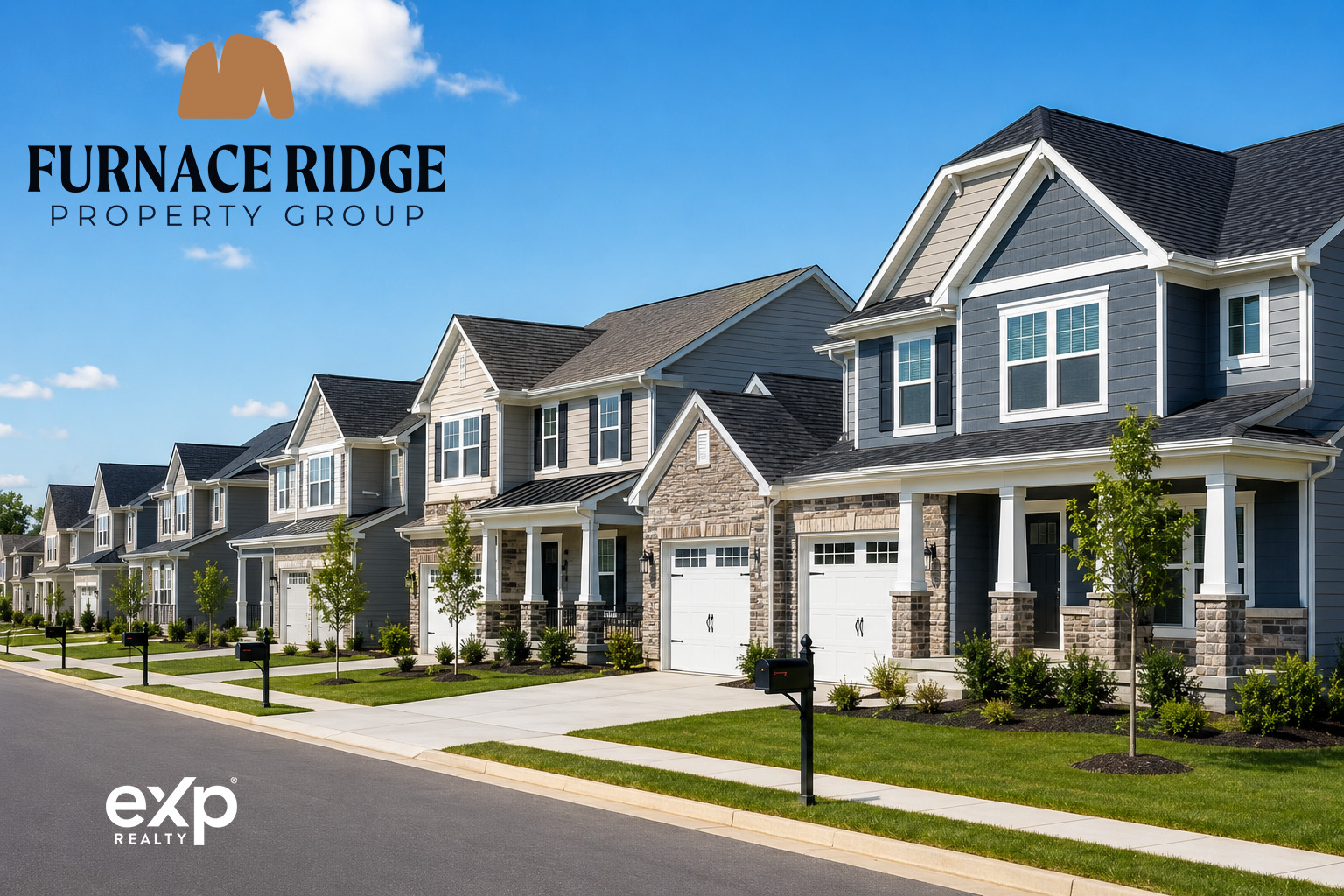
Winchester, Virginia is one of those markets where buyers relocating from Northern Virginia genuinely do a double-take when they see what their budget can get them. New construction homes that would push $900,000 or more in Loudoun County are sitting in the mid-$400s here, and that gap is real enough to change what a move to the Shenandoah Valley actually means for your family's long-term goals. The catch is that Winchester's new construction market has grown fast, and there are now multiple builders active across different parts of the city and Frederick County, each serving different price points, offering different home styles, and building in communities that vary quite a bit in terms of location and what's included at base price. If you're moving from out of the area, sorting through all of that before you ever set foot in a model home can feel like a lot. That's exactly what this guide is designed to help with. Rather than walking into a sales office without context, you'll come away from this knowing which builders are currently active in Winchester, what price ranges they generally serve, where their communities are located, and what factors tend to push the final cost of a new build higher than the advertised starting price. Whether your budget is closer to $350,000 or $650,000, understanding how builders differ here will help you focus your search and set expectations that actually hold up when you start comparing homes side by side.
What Buyers Need to Know First About Winchester New Construction
Most new construction in Winchester and the surrounding Frederick County area is priced somewhere between the mid-$300s and the mid-$700s, with where you land in that range depending on the square footage you need, the community you choose, and how many finishes you upgrade at the design center. According to the May 2025 housing report from Bright MLS, the median sold price for a home in Winchester was $425,000 — and for buyers coming from Northern Virginia, that number tells a compelling story. Living in Winchester is over 30% cheaper than in cities like Fairfax, and home prices are nearly half of what buyers are used to seeing in markets like Loudoun or Fairfax County. That kind of difference doesn't just affect your mortgage payment — it changes what kind of home you can actually achieve.
Here's a quick breakdown of how the Winchester new construction market generally divides by buyer type:
- Entry-level — Townhomes and smaller single-family homes typically start in the mid-to-upper $300s. These are best suited for first-time buyers or those working with tighter financing, and they tend to offer less lot size and fewer included features than higher-priced tiers.
- Core family — This is the most active segment, generally ranging from the low $400s to the mid-$500s. Buyers here are usually looking for three to four bedrooms, a two-car garage, and enough space for a growing household without stretching their budget too far.
- 55+ — Active adult communities in Winchester typically fall in the $400s to low $500s, but what separates them from other categories is the lifestyle design — low-maintenance living, single-level floor plans, and amenities built specifically for that stage of life.
- Move-up — Buyers trading up from a starter home or relocating with more purchasing power will find options in the $500s to low $600s. These homes tend to offer larger lots, more structural options, and higher-end standard finishes than what's available at the core family tier.
- Higher-end — The upper range of Winchester new construction pushes into the mid-to-upper $600s and occasionally beyond, usually in communities with larger homesites, more architectural variety, or premium locations relative to commuter routes and amenities.
Narrowing down which builder or community to visit first gets a lot easier when budget and lifestyle come before anything else. Winchester has multiple active builders spread across different parts of the city and county, each with their own communities, floor plan lineups, and included feature standards. Comparing them without a clear sense of what you need tends to create more confusion than clarity. Deciding whether you're looking for a townhome in the $370s or a single-family home in the $520s — and whether walkability or lot size matters more to you — gives you a real filter to work with before you ever walk into a model home.
The Price Bands That Make the Search Easier
Translating Winchester's new construction pricing into something you can actually act on means sorting the market into three clear ranges — each one pointing you toward a different set of builders, home types, and realistic outcomes before you ever schedule a tour.
Under $400K
This is the tightest segment of the Winchester new construction market, and it rewards buyers who go in with clear expectations. DRB Homes currently holds an average list price of $384,990 in this range, making it one of the few builders actively serving buyers at this level. What you'll typically find here are townhomes and smaller attached homes, usually running two to three bedrooms and somewhere between 1,400 and 1,800 square feet. Lot sizes are minimal — most of these homes sit in denser, more compact communities where the trade-off is lower cost rather than outdoor space. Standard finishes tend to be builder-grade, meaning LVP flooring, basic cabinetry, and limited structural options without paying extra at the design center. For first-time buyers or those with firm financing limits, this range is still achievable, but the selection is narrower than what you'll find in the tiers above.
$400K to $550K
This is where the Winchester new construction market opens up considerably. The average new home price over the last 12 months sits at $475,835, which puts the heart of buyer activity squarely in this band. Builders like D.R. Horton, with an average list price of $474,470 across five communities, and Maronda Homes at $476,823 across three communities, are the most active here. Buyers in this range can realistically expect three to four bedrooms, a two-car garage, and somewhere between 1,800 and 2,600 square feet of finished living space. Community options are broader — both attached and detached single-family homes are available — and standard finishes are noticeably better than the entry tier, with more included features and greater flexibility at the design center without the cost climbing dramatically.
$550K to $750K+
At this level, the experience of buying new construction in Winchester shifts. Brookfield Residential averages $494,990 but stretches into this range depending on the floor plan and options selected, while Richmond American Homes carries an average list price of $747,440 — the highest among active builders in the area. Homes here typically run four to five bedrooms, often with bonus rooms, larger primary suites, and finished basements as either standard or accessible options. Square footage generally starts around 2,600 and can push well past 3,500 depending on the plan. Lots are larger, finishes are more elevated at the base level, and communities tend to offer more architectural variety and premium locations relative to commuter routes and local amenities. The price range of $549,990 to $749,990 reflects what buyers can expect when they're prioritizing space, quality, and long-term livability over entry cost.
Setting your budget before researching builders cuts the decision-making process down significantly — each of these three ranges points to a different shortlist of communities and builders worth visiting, which means less time touring homes that were never the right fit to begin with.
Which Builders Fit Your Budget and Lifestyle
Knowing the price bands is only part of the equation. The next step is matching those numbers to the right builder — one whose communities, floor plan lineup, and included features actually align with how your household lives and what you're hoping to achieve in this move.
- D.R. Horton — Families looking for newer communities with sensible layouts and room to grow will find D.R. Horton worth prioritizing. With an average list price around $474,470 across five active communities in the Winchester area, this builder sits comfortably in the mid-range and delivers floor plans designed around everyday family function rather than flashy extras. The value-to-space ratio here is one of the more consistent in the market, which is why this builder tends to attract buyers who want reliability over customization.
- Maronda Homes — Maronda gives buyers more flexibility than most mid-market builders because their portfolio spans both move-up and more accessible price points. Their Abrams Pointe community in Winchester starts in the $549s, with homes ranging from approximately 2,418 square feet to 3,614 square feet and configurations of 3–6 bedrooms — making it a realistic dream for families who need serious square footage without pushing into luxury territory. Buyers who want room to grow without overextending their budget will find Maronda's range genuinely useful.
- Brookfield Residential — This builder draws two very different types of buyers — families who want amenity-rich communities and 55+ buyers who are done with yard work and home maintenance. Brookfield's communities are designed around lifestyle as much as square footage, with low-maintenance options and shared amenities that make the day-to-day easier. For relocating buyers who want a community that feels complete rather than still developing, Brookfield is worth putting near the top of the list.
- Richmond American Homes — Buyers who want more space, better standard finishes, and a home that doesn't require a long upgrade list to feel complete will find Richmond American Homes at the upper end of Winchester's new construction market. With an average list price of $747,440, this builder serves households that have the budget to prioritize quality from the start rather than working up to it through add-ons. The floor plans here tend to run larger, and the included features reflect that higher baseline.
- DRB Homes — For buyers whose financing keeps them closer to the high $300s, DRB Homes is one of the few builders actively working in that range, with an average list price around $384,990. The trade-off is smaller footprints and fewer included options, but for buyers who need to get into a new construction home without stretching past their limit, DRB is a practical starting point.
- Lennar / Senensi Village — Buyers relocating from Northern Virginia who are still comparing markets will find Lennar's presence in Winchester — particularly at communities like Senensi Village — a useful reference point. The pricing here tends to undercut what those same buyers would face in Loudoun or Prince William County by a significant margin, which can make the decision to commit to Winchester a lot easier to finalize.
Matching the right builder to your situation comes down to three things working together — what you can spend, how much space your household genuinely needs, and what kind of community you want to come home to every day.
Where Builders Are Developing Around Winchester
Settling on a builder and a budget gets you halfway there — the other half is figuring out which part of Winchester actually fits your daily life. The zip code you build in shapes how far you drive to grab groceries, how long your morning commute runs, and whether your neighborhood feels like a tight-knit community or a quieter retreat at the edge of town.
Closer-In Winchester and 22601
New construction within the 22601 zip code is limited compared to the outer areas, but what it offers is a genuinely central address. Buyers who build or buy here are within easy reach of downtown Winchester — the pedestrian mall, local restaurants, medical offices, and everyday retail are all close enough that running errands doesn't turn into a half-hour drive. For buyers who work locally or want to spend less time in a car, this proximity is a real advantage. It's also a natural fit for buyers who are downsizing or relocating without school-age children, where walkability and access to services matter more than square footage or lot size.
22602: Community Amenities and Mainstream New Construction
The 22602 zip code is where the bulk of Winchester's active new construction activity is concentrated, and the variety here reflects that. Communities like Abrams Pointe and Abrams Crossing at Meadow Branch draw buyers who want established neighborhood infrastructure alongside their new home — think sidewalks, community green space, and proximity to major retail corridors without sacrificing that new-build feel. Rossum Crossing and Willow Run round out the options in this zip code, each offering different floor plan styles and price points that appeal to a wide range of buyers. The convenience factor in 22602 is hard to argue with — Route 7 and other key commuter routes are accessible, and the area sits close enough to shopping centers and services that daily life runs smoothly without requiring much planning around distance.
22603: More Space, Value, and Different Neighborhood Feel
Head northwest into 22603 and the character of new construction shifts noticeably. Lots tend to run larger, the pace feels less dense, and buyers generally get more house for their dollar compared to closer-in areas. Hiatt Pointe at Snowden Bridge is one of the more recognizable communities here, offering single-family homes with access to Snowden Bridge's broader amenity package — a pool, clubhouse, and walking trails that give the neighborhood a resort-like feel without the resort price. Retreat at Winding Creek serves a different buyer entirely, catering to the 55+ market with low-maintenance living and age-restricted community design that prioritizes ease and connection over square footage. For buyers who want room to breathe, a stronger sense of neighborhood identity, or a lifestyle-specific setup, 22603 consistently delivers on those priorities.
Narrowing your location comes down to three filters — how far you're willing to drive for work or daily needs, whether a built-out community with shared amenities matters to you, and whether a central address or a larger home on more land is the better trade-off for where you are in life right now.
Why Two Homes in the Same Community Can Have Very Different Prices
Two homes sitting side by side in the same Winchester community can carry price tags that are $100,000 or more apart — and that gap has nothing to do with the builder or the neighborhood. It comes down to the specific decisions made on each home, from the floor plan selected at the start to the finishes chosen at the design center.
Here's what actually drives those differences:
- Square footage and bedroom count — The floor plan you choose sets the baseline for everything else. A three-bedroom home at 1,700 to 1,900 square feet will price out significantly lower than a five-bedroom plan pushing past 3,000 square feet, even within the same community and from the same builder. That size jump alone can represent a $60,000 to $100,000 difference before a single upgrade is added.
- Basement and structural options — Adding a finished basement is one of the fastest ways to push a home into a higher price tier. Builders typically offer unfinished, partially finished, and fully finished basement options, with each step adding cost. Structural choices like morning rooms, extended garages, or additional windows are also priced separately and can add tens of thousands to the contract before you reach the design center.
- Lot size and premium lot placement — Not every lot in a community is priced the same. Corner lots, cul-de-sac positions, backing to open space, or elevated homesites with better views all carry what builders call a lot premium — a separate line item added on top of the base price. In active Winchester communities, these premiums can range from a few thousand dollars to well over $20,000 depending on the site.
- Kitchen and interior finish upgrades — The design center is where base prices start climbing fast. Quartz countertops, upgraded cabinetry, hardwood flooring, and tile selections all carry individual price tags that stack quickly. A buyer who upgrades the kitchen, primary bath, and main-level flooring can easily add $30,000 to $50,000 to their contract without touching a single structural option.
- Outdoor living features and garage expansions — Covered porches, composite decking, and extended patio slabs are popular additions in Winchester communities, and each one adds to the final number. Upgrading from a standard two-car garage to a three-car or tandem configuration is another common cost driver that buyers often don't factor in early enough.
- Base price vs. final contract price — The advertised starting price is simply a starting point for builders to showcase their homes at an attractive price. It usually reflects the most basic version of the most affordable floor plan with no upgrades, no lot premium, and no structural changes. As one industry resource puts it, "BASE PRICE + LOT PREMIUM + STRUCTURAL UPGRADES + DESIGN UPGRADES = FINAL HOME PRICE" — and that final number is what you actually sign for.
Touring a base model and a fully upgraded model back to back gives you the clearest picture of what you're working with. The base model shows you the floor plan bones and the standard finishes; the upgraded model shows you what the builder's design team considers a finished product — and what it costs to get there. Walking both in the same visit makes it far easier to decide which upgrades are worth the added cost and which ones you can live without.
How to Narrow Your Builder List Before You Start Touring
Understanding what drives price differences between homes in the same community gives you real leverage — and the best way to use that leverage is to filter your options down before you set foot in a single model home.
Start With Three Filters
Your starting point is three practical questions — what's your firm budget ceiling, what kind of community fits your daily life, and how much does your commute or proximity to specific services actually matter? These aren't abstract preferences. They're immediate screening tools. A buyer whose budget caps at $420,000 and who needs to reach I-81 within ten minutes has already ruled out several communities without touring a single home. Locking in these three answers first means every builder and community you consider from that point forward is already a realistic candidate.
Separate Must-Haves From Upgrade-Driven Wants
The gap between what you need and what you'd love becomes a financial decision the moment you start comparing base prices to finished contract totals. A home advertised at $469,990 can climb past $560,000 once a finished basement, a premium lot backing to open space, and upgraded kitchen cabinetry are added — none of which are unusual requests. The discipline here is writing down what the home genuinely needs to function for your household before you walk into a design center, not after. A fourth bedroom might be non-negotiable. Quartz countertops might not be. Knowing the difference before a sales rep walks you through the upgrade catalog keeps your final number from drifting well past what you originally planned to spend.
It also helps to compare total costs including incentives, interest rate buydowns, and closing cost contributions when evaluating two builders at similar price points. A builder with a slightly higher base price but stronger financing incentives can end up costing less over the life of the loan than a competitor with a lower advertised starting price and no rate support.
Match the Builder to the Kind of Buyer You Are
The Winchester market has enough builder variety that most buyer types can find a natural fit without compromising too much. First-time buyers working closer to the high $300s will find DRB Homes one of the few builders actively serving that range. Move-up families who need four or more bedrooms and room to grow tend to gravitate toward D.R. Horton and Maronda Homes, both of which offer strong square footage at mid-range prices. Active adults prioritizing low-maintenance living and community amenities will find Brookfield Residential's 55+ options worth a close look. Buyers who want more flexibility in layout and finishes — without going fully custom — should spend time with Richmond American Homes, where the design process allows for more meaningful personalization at the contract stage.
For buyers who own land or want a home built to their own specifications rather than a builder's floor plan, semi-custom and custom paths are worth exploring separately. Regional builders like Mitchell Homes serve buyers in this category, offering a more hands-on design process and greater control over how the finished home comes together.
Shortlisting two or three builders and two or three communities before scheduling tours keeps the process focused — and makes each visit far more productive than walking into model homes without a clear frame of reference.
Final Thoughts
Winchester holds up well when you stack it against most Northern Virginia markets. The price points are more accessible, the builder options are varied, and new communities are still coming online at a pace that gives buyers real choices. That combination is harder to find the further north you go.
What this guide aimed to do was give you a working foundation before you start touring. Knowing that a builder like Ryan Homes tends to serve a different price range than a custom regional builder, or that a finished basement or upgraded kitchen package can shift your final number by tens of thousands of dollars, changes how you walk into a sales office. You stop reacting and start comparing.
The most practical first step is still the same one this article opened with - set a realistic budget range, then match it to the builders and community types that actually build within it. Builder averages are useful reference points, but the final price on any home depends on the lot, the square footage, and the upgrades you choose. Those three variables move the number more than most buyers expect.
You now have enough context to build a smarter shortlist, ask better questions on tours, and avoid the surprise of falling in love with a base-price home that ends up $80,000 over budget once the options are added in.
Go into your first tour with that clarity, and you'll already be ahead of most buyers searching in Winchester right now.
Check out this article next