
Local taxes deserve a closer look than a headline. Before we vote, we should understand what is being authorized, where the money can go and which decisions local officials will still have to make.
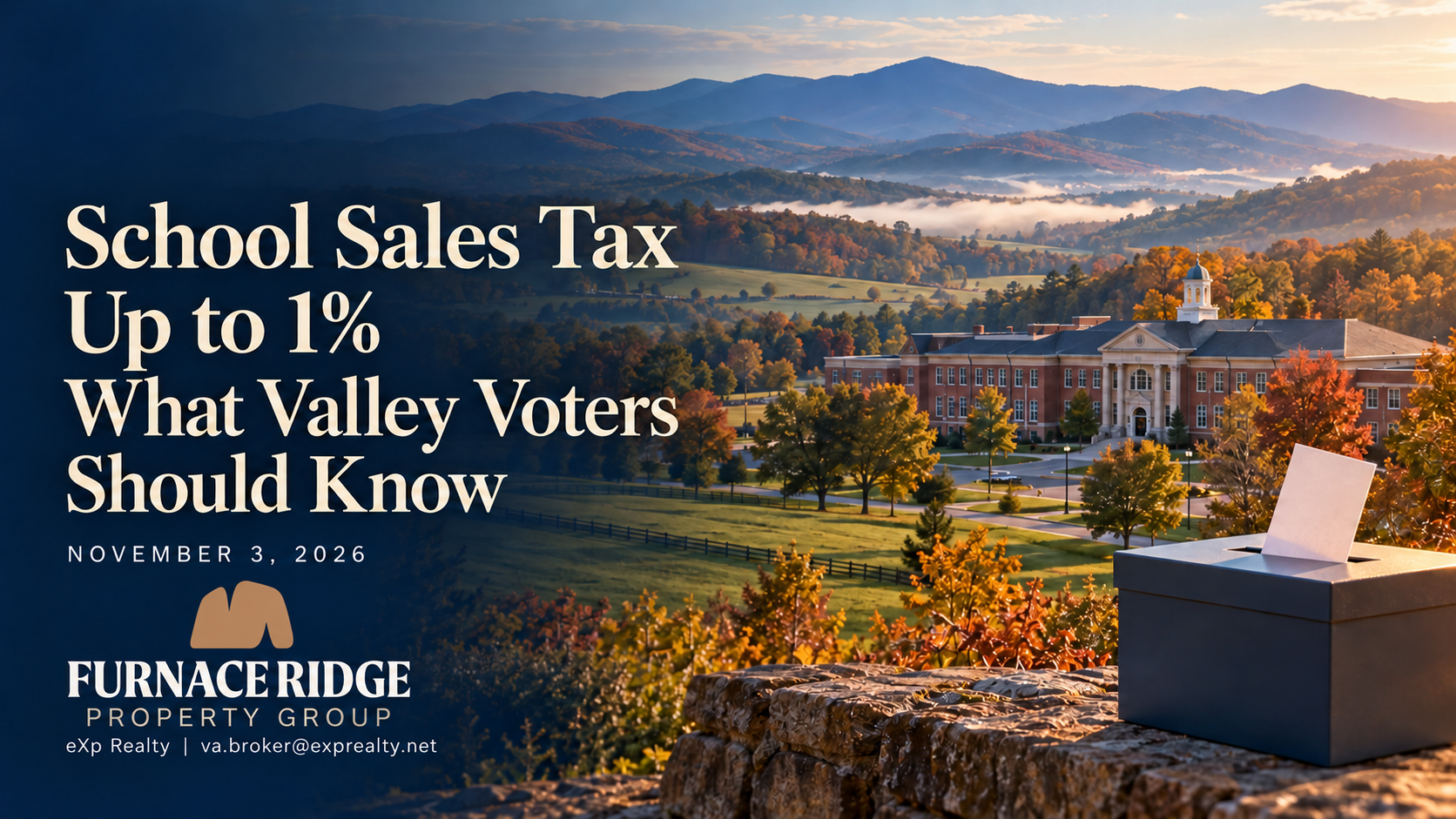
On November 3, voters in Frederick County, Winchester, Augusta County, Staunton and Waynesboro will consider an additional local retail sales tax of up to 1% for school capital projects. All five measures appear on the Virginia Department of Elections’ published referendum list.
I’m not recommending a yes or no vote. My purpose is to put the facts in front of you so you can make your own decision.
Facts first, and words matter.
What the law allows
Virginia Code § 58.1-605.1(A) sets these limits for the localities covered here:
Rate: Up to one additional percentage point.
Use: New school construction or major renovations, including related bond and loan financing costs.
Exemptions: Qualifying food for human consumption and essential personal hygiene products are excluded from this additional tax.
Expiration: No later than 20 years after the resolution initiating the referendum. For financed projects, expiration is tied to the bond or loan repayment date; otherwise, officials specify a date.
Implementation: Approval authorizes the tax. Local officials must adopt an ordinance to impose it, effective on the first day of a month at least 120 days after adoption.
The statute does not require a corresponding real estate tax reduction. That remains a separate local decision.
What “up to 1%” means for a purchase
At the full proposed increase, you would pay an additional $1 on a $100 qualifying taxable purchase, or $10 on a $1,000 qualifying purchase.
Those figures represent the increase alone. They are not the total sales tax on the purchase.
The words “up to” also matter. Winchester explains on its official referendum page that voter approval would still leave City Council to consider a rate and adopt an ordinance.
Where the measures appear
These are summaries of the expiration provisions in the state’s published referendum wording.
Locality | Maximum additional rate | Published expiration provision |
Frederick County | 1% | No more than 20 years; no calendar date stated |
City of Winchester | 1% | No later than July 14, 2046 |
Augusta County | 1% | August 11, 2046 |
City of Staunton | 1% | July 23, 2046 |
City of Waynesboro | 1% | No later than July 13, 2046 |
As reviewed October 11, Clarke, Warren, Shenandoah, Page and Rockingham counties and the City of Harrisonburg do not appear with a school sales tax measure on that state list. Your local registrar’s sample ballot is the place to confirm what appears for your address.
Waynesboro’s published language is a statement describing the revenue restrictions and expiration. Its school division publishes that wording as well.
Revenue estimates need context
Winchester currently estimates $8 million to $10 million annually at a full 1%, or $4 million to $5 million at 0.5%, according to its official referendum information.
That is a projection. Actual collections will depend on taxable sales and the rate adopted.
When reviewing an estimate, look for its source, assumptions and date. A number from an early discussion may differ from the figure officials are using today.
What I would ask before voting
I would start with the proposed projects and work through the numbers:
Which schools and projects would receive funding first?
What are the estimated costs, and how current are those estimates?
What rate do officials intend to adopt?
Would projects be financed, and what would repayment cost?
How would residents track spending and progress?
If a property tax adjustment has been discussed, what action has actually been taken?
A proposal, a projection and an adopted ordinance carry different weight. Read the documents behind the discussion.
Check your ballot
The Virginia election schedule lists in-person early voting through 5 p.m. Saturday, October 31, 2026. Election Day is Tuesday, November 3, 2026.
Contact your local general registrar for your sample ballot, voting locations and hours. Take a few minutes to read the actual language before you vote.
Local knowledge is part of owning property
Taxes, infrastructure and local decisions belong in the conversation about property ownership. If you’re buying or selling a home, commercial property or land in the Shenandoah Valley, I’m glad to help you understand the local factors and ongoing costs to consider.
Visit furnaceridge.com.
Allen Stewart | Furnace Ridge Property Group | eXp Realty
Check out this article next